
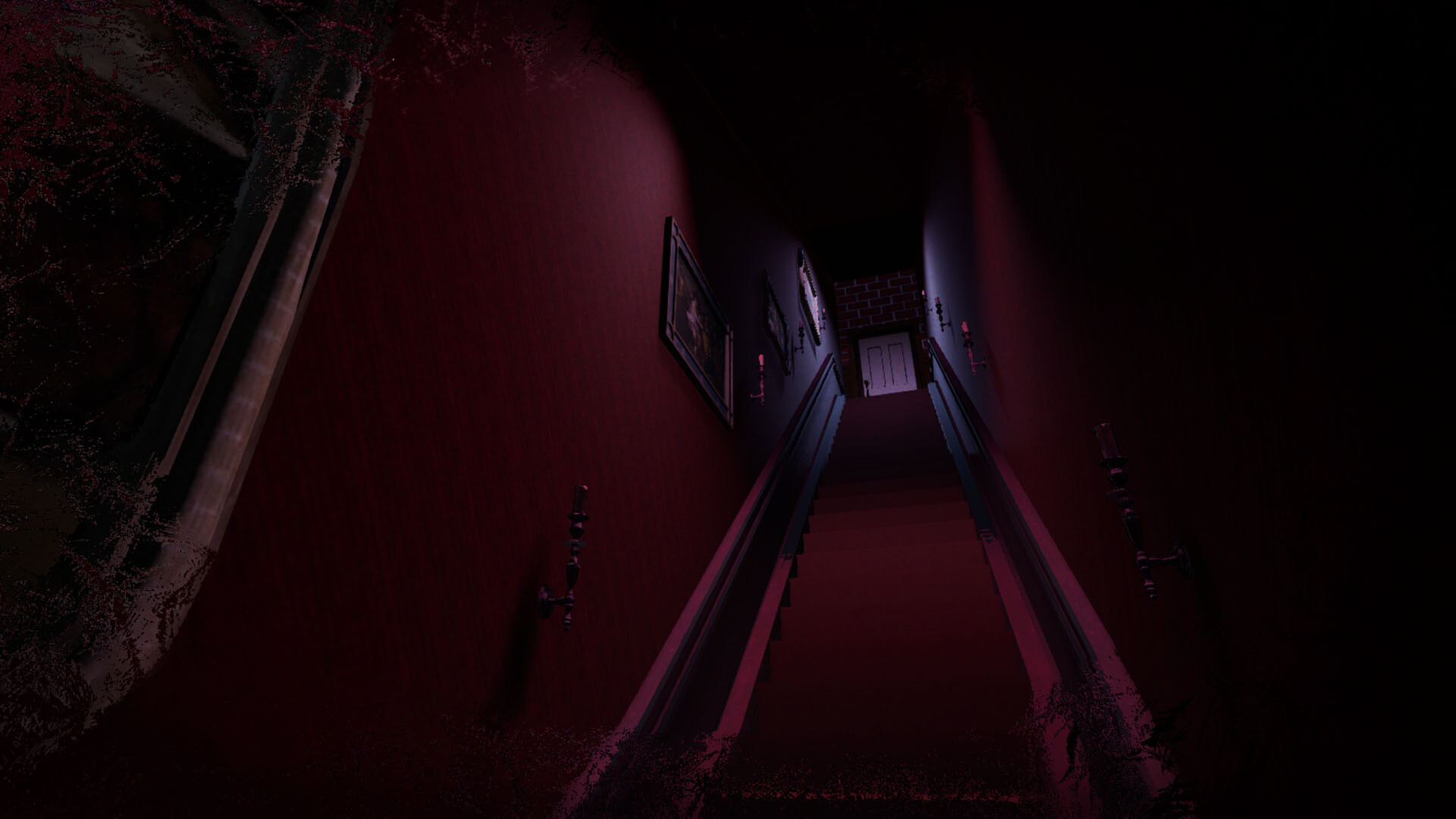
The premise of Drunken Goddess Reflux sets up a binary. Win the drinking contest and you go back to your life. Lose it and you stay in Hell with a demon who loves you enough to kill you. She calls that a happy ending; the game's own copy calls it one-sided.
A binary, however, is not what the store describes. The tags include multiple endings, and the description ends on a promise: survive the night, and savor seven flavors of ruin. Those two facts sit oddly together until you notice which side of the win condition they are attached to.
The win condition is singular
Every announcement, every piece of store copy and both mechanical pages on this site describe the same single victory: get the demon drunk enough that she spills her soul before you spill yours.
There is no alternate route out. Nothing in the material suggests a negotiation, a secret exit or a way to escape Pandemonium without beating her at her own table. The premise is a wager, and the wager has one winning side.
That means the multiple endings almost certainly live on the losing side of the board — or in the shape of the win rather than the fact of it. Both readings are consistent with what has been published, and the game's structure makes the second one more interesting.
Why seven
The phrase seven flavors of ruin is doing double duty. It is the kind of line a drinks menu uses, and Pandemonium is a bar; the bottles on the table are already established as the visual centre of the game.
The Japanese listing puts a floor under it: 七種以上, seven or more. So the figure is a minimum rather than a count, which is a more honest way to sell an ending collection than pretending to a number the player can finish.
If the seven are drinks, then the endings are what each drink does to you — a run that ends on the absinthe is a different ruin from one that ends on the cheap stuff. If the seven are endings, then the figure is the studio telling you how many variations exist.
Neither reading has been confirmed, and both are worth holding at once. What can be said with confidence is that the number seven was chosen and printed in the store description, which is not an accident in a game where every other number on screen is a mechanic.
Losing is not a game-over screen
The design of the losing state is the part worth understanding before you play, because it changes how a run feels.
Losing means your soul leaves through your mouth and Femme Soule gets the eternity she was negotiating for. In most games that is a fail state: the screen fades, you retry. Here it is described as an outcome — a happily-ever-after afterlife that she enjoys and you do not.
Combined with the roguelite tag and the coin economy, that suggests a structure where each night is a run, a run ends in an outcome rather than a death, and the collection of outcomes is the thing you are working through. You are not trying to avoid losing once. You are trying to see what losing produces, and to eventually produce the one result she does not want.
What the title is telling you
Reflux is the medical word for something coming back up. It is also, structurally, what the game does: a night that ends and then starts again, with the same demon and a slightly different table.
That loop is the reason the endings can be plural without the story becoming a branching tree. A roguelite does not need seven separate plots to produce seven outcomes; it needs one night that can end in seven recognisable ways, and a reason for the player to want to see each one. The title says the mechanism out loud.
The two shapes a run can end in
Stripped of speculation, a night can finish in one of two ways.
You outlast her. She spills first, you walk out, and the run resolves in your favour. What the game does with that — a short epilogue, a score screen, a next-night hook — has not been shown.
She outlasts you. You spill, and the night continues in Hell without you having any say in it. This is the branch the marketing leans on, which is unusual: most games hide their failure state, and this one has built its tone around it.
The multiple-endings tag means at least one of those branches forks. Given that the losing branch is the one with the flavour language attached to it, that is where the forks most likely are.
What an ending is worth
A roguelite that ends every run in a narrated outcome is making a promise about replay. The failure states have to be interesting enough that you want to see them, and the win has to be hard enough that most of what you see is failure.
That is a demanding design. It only works if the writing on the losing side is good, because the player will spend most of their time there. The fact that the store copy sells the losing ending rather than the winning one is the strongest hint that the studio knows this and has written accordingly.
Questions people ask about the endings
How many endings does Drunken Goddess Reflux have?
Not published. The store tags multiple endings and the description mentions seven flavours of ruin, but no count or list of endings has been given.
Can you get a good ending?
There is one way to leave Hell and it requires beating Femme Soule at the drinking contest. Whether the game treats that as the good ending, or whether it has something to say about walking away, is not something the material answers.
Is losing permanent?
No. The game is a roguelite with runs, so a lost night is a lost run rather than a deleted save. Losing is content you are meant to see.
Are there choices that affect the ending?
Unknown, but the systems suggest consequences rather than dialogue options. The decisions that matter in this game are which bottles you take and which cards you spend, not which line you pick.
The short version
One exit, many ways to stay. If you go into Drunken Goddess Reflux expecting the endings to be a reward for winning, the structure will read as thin. If you go in expecting them to be a catalogue of how badly a night can go, the seven-flavour line stops being marketing and starts being a table of contents.